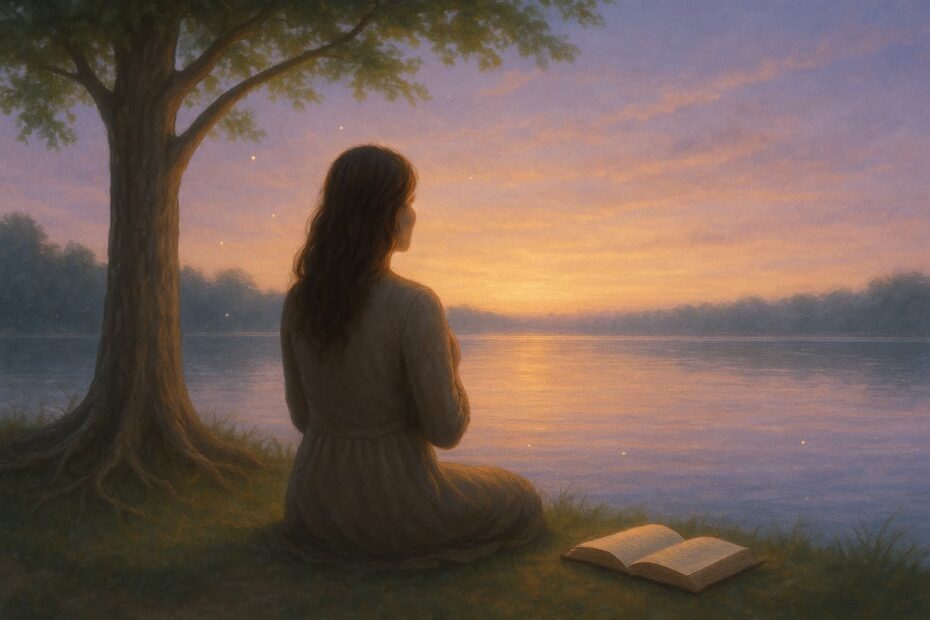
🌟 Introduction: When the Heart Seeks Meaning
There are moments when life invites us—or pushes us—within. Days when the world feels too heavy, when pain runs deep, and silence becomes the only safe place. In those moments, spirituality may arise not as a ready-made answer, but as a loving presence. It doesn’t demand belief, dogma, or ritual. It simply offers itself as comfort, as path, as light.
Personal development, often pursued through books, courses, and therapy, takes on a new dimension when infused with spirituality. It’s not about perfection, but about depth. Not about being better, but about being whole. Spirituality invites us to look inward with tenderness, to embrace our shadows with compassion, and to walk with purpose even when everything feels uncertain.
Scientific studies already recognize this invisible force. A review published in the Revista Ibero-Americana de Humanidades, Ciências e Educação found that spirituality is strongly linked to emotional resilience, purpose-seeking, and quality of life. Another study from Bol. Acad. Paul. Psicol. highlights spirituality as a powerful tool in coping with stress and promoting mental health.
This article is an invitation to the soul—a journey of healing, comfort, and reconnection. May each word written here feel like a warm embrace to those who read.
Suggested reading:
- The Artist’s Way by Julia Cameron — on creativity as spiritual expression
- The Gifts of Imperfection by Brené Brown — on vulnerability as strength
- Man’s Search for Meaning by Viktor Frankl — on spirituality amid extreme suffering
Suggested films and series:
- 🎬 Miracles from Heaven (USA) — faith and healing through pain
- 🎬 I Want to Eat Your Pancreas (Japan) — delicacy, spirituality, and purpose
- 🎬 Navillera (South Korea) — late dreams, spiritual connection, and redemption
🤍 When Pain Calls for Silence: Spirituality’s First Embrace
Pain teaches in quiet ways. It doesn’t shout or explain—it simply moves through us. And when everything seems to fall apart, the heart often seeks something greater, something unseen but deeply felt. In that space between suffering and the longing for healing, spirituality reveals itself as an invisible embrace.
Spirituality doesn’t need a name. It may come as a whispered prayer, a sunset that stirs emotion, or a song that touches the soul. It’s what remains when all seems lost. It reminds us that even in pain, we are still worthy of love.
Psychology acknowledges this role. According to research published by SciELO Brasil, psychologists identify spirituality as a source of balance and meaning, especially in clinical contexts of suffering. It doesn’t replace treatment—it complements it, offering a space for reconnection with one’s essence.
For those walking through pain, spirituality can be the first step toward healing. Not as escape, but as comfort. As if to say, “I see you. You are not alone.”
Suggested reading:
- The Art of Loving by Erich Fromm — on love as a spiritual force
- When Nietzsche Wept by Irvin D. Yalom — on pain, philosophy, and transcendence
Suggested films and series:
- 🎬 A Silent Voice (Japan) — guilt, redemption, and quiet spirituality
- 🎬 The Shack (USA) — spirituality in the face of grief
- 🎬 Move to Heaven (South Korea) — death, memory, and spiritual healing
🌙 A Tired Soul Also Deserves Rest: Finding Refuge in the Sacred
There’s a kind of exhaustion that sleep can’t fix. It lives in the soul—made of undigested losses, unmet expectations, and silent battles. When this weariness settles in, spirituality can be the place where we rest without judgment, without hurry, without pressure.
Spirituality offers a kind of rest that’s not just physical, but existential. It invites us to release control, trust life’s flow, and allow the unseen to hold us. It gently says, “You don’t have to carry it all alone.”
A study published in the Revista Brasileira de Terapias Cognitivas found that spiritual practices like meditation, contemplation, and prayer are linked to reduced stress and improved emotional health. They act as anchors in the storm.
Suggested reading:
- The Immoral Soul by Nilton Bonder — on spirituality as sacred rebellion
- The Rest of the Soul by Sheila Walsh — on finding peace amid pain
Suggested films and series:
- 🎬 My Mister (South Korea) — emotional fatigue and quiet redemption
- 🎬 Into the Wild (USA) — spiritual search and detachment
- 🎬 Wandering Witch: The Journey of Elaina (Japan) — solitary journeys and transformative encounters
🌈 Spirituality as a Path to Healing: Rebuilding with Love and Faith
Healing isn’t linear. It comes in waves, in sighs, in small everyday miracles. And often, it’s spirituality that guides us through this invisible path of reconstruction. Not as magic, but as presence.
Spirituality teaches us that we are more than our wounds. It reminds us that something within us remains untouched, even after pain. That something is our essence—the divine that lives in each of us.
Research from the American Psychological Association shows that people with regular spiritual practices have greater resilience and ability to cope with trauma. Faith, even non-religious, acts as a protective factor for mental health.
Suggested reading:
- The Power of Now by Eckhart Tolle — on presence as healing
- The Shack by William P. Young — on spirituality and forgiveness
Suggested films and series:
- 🎬 Hi Bye, Mama! (South Korea) — grief, spirituality, and reconnection
- 🎬 Your Name (Japan) — destiny, soul, and healing encounters
- 🎬 Peaceful Warrior (USA) — spirituality in body and mind
🔥 The Sacred Within Us: Rediscovering Inner Strength
There’s a quiet strength inside each person. It doesn’t shout or impose—it simply waits to be recognized. Spirituality helps us rediscover that strength, not as something external, but as part of who we are.
Rediscovering the sacred within is an act of empowerment. It’s realizing we’re not broken—just in process. It’s understanding that light doesn’t come from outside, but rises from within.
Carl Jung once said, “Who looks outside dreams; who looks inside awakens.” Spirituality is that inward gaze—deep, honest, transformative.
Suggested reading:
- Women Who Run with the Wolves by Clarissa Pinkola Estés — on archetypal strength and feminine spirituality
- A New Earth by Eckhart Tolle — on spiritual evolution
Suggested films and series:
- 🎬 It’s Okay to Not Be Okay (South Korea) — trauma, healing, and inner strength
- 🎬 Spirited Away (Japan) — spiritual transformation and courage
- 🎬 Soul (USA) — purpose and essence
💗 Self-Compassion as a Spiritual Act: Forgiveness, Kindness, and New Beginnings
Spirituality teaches us that love begins at home—within ourselves. To embrace oneself is to recognize that we are worthy of care, even with our flaws. It’s looking at ourselves with tenderness and saying, “It’s okay. You’re learning.”
Forgiveness—especially self-forgiveness—is one of the most spiritual acts there is. It liberates, heals, and opens space for new beginnings. Spirituality invites us to this radical gesture of kindness.
Studies from Harvard Medical School show that compassion and forgiveness practices are linked to reduced symptoms of depression and anxiety, and promote greater emotional well-being.
Suggested reading:
- The Book of Forgiving by Desmond Tutu — on spiritual healing through forgiveness
- Self-Compassion by Kristin Neff — on self-kindness as spiritual practice
Suggested films and series:
- 🎬 Uncle (South Korea) — new beginnings and self-love
- 🎬 Orange (Japan) — regret, forgiveness, and hope
- 🎬 The Pursuit of Happyness (USA) — dignity and starting over
✨ Between Tears and Light: Spirituality as a Source of Hope
Hope is a form of faith. It doesn’t deny pain—it believes there’s something beyond it. Spirituality offers this hope—not as illusion, but as vital force.
Even when everything seems dark, there’s a light that insists on shining. Spirituality reminds us we’re part of something greater, and that this something holds us—even when we can’t see it.
According to the Revista Brasileira de Psicologia da Saúde, spirituality is one of the main coping factors in patients with chronic illnesses, offering hope and meaning even in difficult contexts.
Suggested reading:
- Hope by Rubem Alves — on poetic spirituality
- Cross Roads by William P. Young — on faith in hard times
Suggested films and series:
- 🎬 Hospital Playlist (South Korea) — hope, friendship, and everyday spirituality
- 🎬 I Want to Eat Your Pancreas (Japan) — life, death, and spiritual beauty
- 🎬 The Secret (USA) — faith and manifestation
🌿 Divine Presence in Everyday Life: Small Gestures that Heal
Spirituality doesn’t live only in temples. It’s in a cup of tea, in a long hug, in a song that moves us. Small gestures can be deeply spiritual when done with presence and intention.
Cultivating simple rituals—lighting a candle, meditating for five minutes, walking in silence—can transform daily life into a space of healing. Spirituality is practical, embodied, and expressed in gestures.
According to the Journal of Health Psychology, everyday spiritual practices are associated with greater well-being, a stronger sense of purpose, and deeper connection to life.
Suggested reading:
- The Sacred in Everyday Life by Leonardo Boff — on simple spirituality
- Altered Traits by Daniel Goleman — on accessible spiritual practices
Suggested films and series:
- 🎬 Little Forest (South Korea) — spirituality in nature and food
- 🎬 March Comes in Like a Lion (Japan) — emotional healing through routine
- 🎬 The Hundred-Foot Journey (USA/India) — spirituality through cooking
🕊️ Conclusion: Spirituality as an Inner Home
Spirituality is not a destination. It’s a home. An inner place we can return to whenever the world wounds us, whenever the heart feels lost, whenever the soul grows weary. It doesn’t demand perfection—only presence.
To grow personally with the support of spirituality is to allow ourselves to be whole. It’s walking with faith, even without answers. It’s embracing pain without losing hope. It’s living with purpose, even on cloudy days. May this article be more than words. May it be an invitation. A warm embrace. A light. May each person who reads it remember: you are sacred. You are worthy. You are loved.