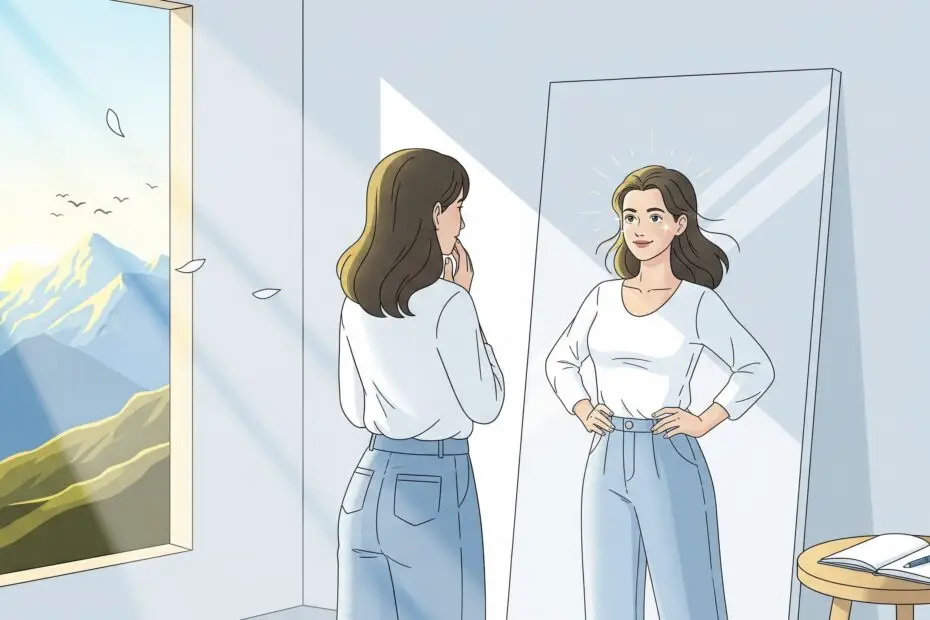
Have you ever felt stuck in patterns that keep you from moving forward? Have you noticed that, more often than not, the biggest obstacle is within you? This article is an invitation to transformation. Let’s explore how self-responsibility can free you from self-sabotage and pave the way for a more conscious, lighter, and empowered life.
🧭 Introduction: The Journey of Self-Responsibility
We live in an age of constant stimulation, where it’s easy to shift blame, justify stagnation, and get lost in narratives that distance us from our true potential. But there is a quiet, transformative power that can change everything: self-responsibility.
Taking responsibility for our choices, emotions, and outcomes is not an act of guilt — it’s an act of courage. It’s the moment we stop being victims of circumstance and become authors of our own story.
According to clinical psychologist Dr. Brené Brown, researcher at the University of Houston, “vulnerability is the birthplace of innovation, creativity, and change.” And embracing self-responsibility requires vulnerability: looking inward, recognizing patterns, and choosing to change.
This article is an invitation to reflect and take action. We’ll explore the mechanisms of self-sabotage, understand how it takes root, and discover ways to overcome it with lightness, awareness, and purpose. Throughout the text, you’ll find book, film, and series recommendations — including Asian works that offer ancient wisdom and emotionally rich storytelling.
Get ready to see yourself with new eyes. Transformation begins now.
🌟 1. Awakening to the Truth: The First Step Is Seeing Yourself
Self-responsibility begins with an honest look at oneself. It’s the moment we stop seeking external blame and start investigating our own attitudes, beliefs, and choices.
According to psychologist Nathaniel Branden, author of The Six Pillars of Self-Esteem, the first pillar is consciousness — being present and aware of both internal and external reality. Without this awareness, change is impossible.
Often, we live on autopilot, repeating patterns inherited from childhood, culture, or past experiences. Awakening requires courage to ask: Am I living the life I chose, or the one imposed on me?
📚 Recommended reading:
- The Power of Now by Eckhart Tolle
- Ikigai: The Japanese Secret to a Long and Happy Life by Héctor García and Francesc Miralles
🎬 Recommended films and series:
- Spring, Summer, Fall, Winter… and Spring (South Korea) – A spiritual journey through life’s cycles and self-discovery
- A Silent Voice (Japan) – A profound anime about regret, forgiveness, and emotional responsibility
🔍 2. The Trap of Self-Sabotage: Why Do We Block Ourselves?
Self-sabotage is an unconscious mechanism that prevents us from reaching our goals. It can show up as procrastination, excessive self-criticism, fear of success, or self-destructive behaviors.
According to clinical psychologist Dr. Ellen Hendriksen, author of How to Be Yourself, self-sabotage often stems from fear of rejection or not being enough. It’s a form of protection — but one that ultimately limits us.
Recognizing these patterns is essential. Ask yourself:
- What habits are keeping me from my dreams?
- What sabotaging thoughts do I repeat daily?
📚 Recommended reading:
- The 5 Patterns of Self-Sabotage by Ana Beatriz Barbosa Silva
- Atomic Habits by James Clear
🎬 Recommended films and series:
- Navillera (South Korea) – An elderly man pursues his dream of becoming a ballet dancer, facing internal and external limitations
- Your Name (Japan) – A story about identity, destiny, and life-changing choices
🧠 3. Invisible Culprits: When We Hand Over Our Power
It’s common to blame the boss, parents, government, partner — anyone — for our failures. But this transfer of responsibility makes us hostages to external forces.
Cognitive psychology shows that the locus of control — a concept developed by Julian Rotter — determines whether we believe life’s outcomes are shaped by our actions (internal locus) or by external factors (external locus). People with an internal locus tend to be more resilient and successful.
Taking control is liberating. It means saying: I am responsible for my life, and I can change it.
📚 Recommended reading:
- Mindset: The New Psychology of Success by Carol S. Dweck
- The Courage to Be Disliked by Ichiro Kishimi and Fumitake Koga (Japan)
🎬 Recommended films and series:
- My Liberation Notes (South Korea) – A series about ordinary people seeking emotional freedom
- Departures (Japan) – A touching film about acceptance, purpose, and reconnection with life
🔓 4. The Power Is in Your Hands: Choosing Is an Act of Freedom
Life is made of choices. And each choice is an opportunity to reaffirm who we are and who we want to become.
According to Viktor Frankl, Austrian psychiatrist and Holocaust survivor, “between stimulus and response, there is a space. In that space is our power to choose our response. In our response lies our growth and our freedom.”
Self-responsibility invites us to occupy that space. Each day, we can choose to act with more awareness, compassion, and courage.
📚 Recommended reading:
- Man’s Search for Meaning by Viktor Frankl
- The Artist’s Way by Julia Cameron
🎬 Recommended films and series:
- Live (South Korea) – A series about police officers facing ethical dilemmas and difficult choices
- Little Forest (Japan) – A young woman returns to her hometown and rediscovers the value of simple choices
💔 5. Wounds That Teach: Turning Pain into Wisdom
Pain is inevitable. But prolonged suffering is optional. When we choose to learn from our wounds, they become sources of wisdom.
Positive psychology, studied by Martin Seligman, shows that people who find meaning in painful experiences develop greater resilience and well-being.
Turning pain into learning is an act of self-love. It’s saying: I deserve to grow, even from what hurt me.
📚 Recommended reading:
- The Subtle Art of Not Giving a Fck* by Mark Manson
- Notes on Grief by Chimamanda Ngozi Adichie
🎬 Recommended films and series:
- Move to Heaven (South Korea) – A series about grief, memory, and family reconnection
- Tokyo Magnitude 8.0 (Japan) – An anime about overcoming adversity after a natural disaster
🗣️ 6. The Inner Voice: Reprogramming Limiting Beliefs
Our thoughts shape our reality. And often, the voice that sabotages us the most is our own.
According to neuroscience studies, including those by Joe Dispenza, it’s possible to reprogram the brain through the repetition of new mental and emotional patterns. Practices like meditation, affirmations, and visualization are powerful tools in this process.
Rewriting your inner dialogue is like planting new seeds. With time and care, they blossom into self-esteem, confidence, and action.
📚 Recommended reading:
- Breaking the Habit of Being Yourself by Joe Dispenza
- The Miracle Morning by Hal Elrod
🎬 Recommended films and series:
- It’s Okay to Not Be Okay (South Korea) – A series about mental health, trauma, and emotional healing
- Shouwa Genroku Rakugo Shinjuu (Japan) – An anime about identity, expression, and personal transformation
🛠️ 7. Purposeful Action: Practicing Self-Responsibility
Self-responsibility isn’t an abstract concept — it shows up in the concrete actions we take every day. It’s when we choose to get out of bed even without motivation, when we decide not to react with anger, when we prioritize what truly matters.
According to Charles Duhigg, author of The Power of Habit, the key to change lies in understanding the habit loop: cue → routine → reward. By identifying the cues that lead to self-sabotage, we can replace them with healthier, more rewarding routines.
Here are some practical ways to apply self-responsibility in daily life:
- Conscious planning: Use tools like bullet journals or productivity apps to organize realistic, achievable goals.
- Positive inner dialogue: Create daily affirmations that reinforce your new identity.
- Emotional responsibility: Instead of reacting impulsively, pause, breathe, and choose how to respond.
- Commitment to the process: Understand that transformation is gradual. Celebrate every small victory.
📚 Recommended reading:
- The Power of Habit by Charles Duhigg
- Essentialism: The Disciplined Pursuit of Less by Greg McKeown
🎬 Recommended films and series:
- Misaeng (South Korea) – A series about the corporate world and the struggle for purpose and dignity
- Barakamon (Japan) – An anime about a calligrapher seeking authenticity and reconnection with his art
🔁 8. The Miracle of Consistency: Small Choices, Big Changes
True transformation doesn’t happen in a single moment of epiphany — it happens through the consistency of small choices. It’s the power of “one percent better every day,” as taught by James Clear in Atomic Habits.
Neuroscience shows that repeating positive behaviors strengthens neural connections, creating new mental pathways. In other words, consistency shapes the brain.
Consistency also builds trust. When you keep promises to yourself, your self-esteem grows. You begin to believe you’re capable — because you’re proving it daily.
Practical suggestions:
- Establish morning routines that include meditation, reading, or journaling.
- Use the “If it takes less than 2 minutes, do it now” technique to avoid procrastination.
- Create a habit tracker and monitor your progress visually.
📚 Recommended reading:
- Atomic Habits by James Clear
- The Happiness Advantage by Shawn Achor
🎬 Recommended films and series:
- Start-Up (South Korea) – A series about persistence, innovation, and personal growth
- March Comes in Like a Lion (Japan) – An anime about overcoming adversity, discipline, and emotional rebuilding
🎭 9. You Are the Protagonist: Rewriting Your Story with Courage
Many people live as side characters in their own lives, waiting for something external to change their path. But self-responsibility invites us to take the lead role — with courage and authenticity.
According to Carl Jung, “until you make the unconscious conscious, it will direct your life and you will call it fate.” Rewriting your story requires bringing unconscious patterns to light and choosing new paths.
Being the protagonist means:
- Owning your desires: Recognizing what you truly want, without fear of judgment.
- Making tough decisions: Choosing what’s right for you, even when it hurts.
- Accepting risks: Courage isn’t the absence of fear — it’s action despite it.
📚 Recommended reading:
- Women Who Run with the Wolves by Clarissa Pinkola Estés
- The Hero with a Thousand Faces by Joseph Campbell
🎬 Recommended films and series:
- Extraordinary Attorney Woo (South Korea) – An autistic lawyer who defies expectations and claims her place
- The Wind Rises (Japan) – A Hayao Miyazaki film about dreams, choices, and legacy
💫 10. Conclusion: The Commitment to Your Best Self
Self-responsibility is more than a personal development tool — it’s an act of love. Love for yourself, for your story, and for the potential that has yet to be lived.
When you stop sabotaging yourself, you create space for your best self to flourish. You stop living in survival mode and start living with purpose, presence, and passion.
It’s not about perfection. It’s about consistency, awareness, and courage. It’s about getting up even when everything feels hard. It’s about looking in the mirror and saying: “I am responsible for my life — and that is liberating.”
🌟 Final invitation: Revisit this article whenever you feel lost. Share it with someone who needs a gentle nudge. And above all, commit to yourself. Because no one else can live your life for you — and that’s the best news you could ever receive.
📚 Additional reading:
- The Gifts of Imperfection by Brené Brown
- Way of the Peaceful Warrior by Dan Millman
🎬 Recommended films and series:
- When the Camellia Blooms (South Korea) – A woman faces prejudice and fear to live her truth
- Whisper of the Heart (Japan) – An anime about dreams, identity, and the power of choice
📣 Call to Action
Did you enjoy this content? Share it with someone who needs that spark to awaken.